
INTRODUCTION:
A wave energy converter (WEC) technology harnesses the energy from ocean waves by capturing their motion and converting it into electricity, typically using devices that float on the water surface and move with the waves, generating power through mechanisms like hydraulic pumps or turbines depending on the design; different types of WECs exist, each suited to varying wave conditions and locations, including point absorbers, attenuators, oscillating water columns, and overtopping devices.
Wave energy converters (WECs) are devices that convert the kinetic and potential energy associated with a moving ocean wave into useful mechanical or electrical energy. Wave energy converters can provide clean energy to power the electrical grid as well as many other applications such as propulsion for ocean vehicles or pumping for seawater desalination.
While there are many unique wave energy converters, they tend to follow common designs, or design archetypes. The seven most common forms of wave energy converters are shown below:
- Point absorbers
- Terminators
- Attenuators
- Oscillating wave surge
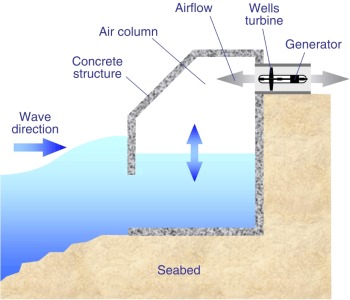
- Oscillating water column
- Submerged pressure differential
- Rotating mass
WORKINGS:
A wave energy converter (WEC) harnesses the kinetic energy from ocean waves by using a floating device that moves with the wave motion, converting this movement into mechanical energy through a power take-off system, which then drives a generator to produce electricity; essentially, the rising and falling motion of waves is used to rotate a turbine, generating power.
- Wave interaction:A floating buoy or structure is designed to interact with the waves, experiencing up-and-down or back-and-forth motion depending on the wave type and device design.
- Power Take-Off (PTO):This mechanism captures the mechanical energy from the wave-induced motion, often using hydraulic pumps or pneumatic systems to convert the movement into pressurized fluid or air.
- Generator :The pressurized fluid or air from the PTO drives a turbine which then spins a generator to produce electricity.
Types of Wave Energy Converters:
- Oscillating Water Column (OWC):A partially submerged chamber where waves push air up and down through a turbine, similar to a piston engine.
- Point Absorber:A floating buoy that moves with the waves, directly driving a generator through a connected mechanism.
- Attenuator:A long, segmented structure that flexes with the waves, transferring energy to hydraulic pumps.
- Overtopping Device:Waves are directed onto a sloping surface, allowing water to flow into a reservoir, creating a height difference to drive a turbine.
Challenges of Wave Energy Conversion:
- Variable wave conditions:Ocean waves are unpredictable and can vary significantly in height and frequency, impacting power generation consistency.
- Harsh marine environment:Devices must withstand extreme weather conditions and corrosion from saltwater.
- Cost-effectiveness:Developing cost-competitive wave energy technologies remains a challenge compared to other renewable sources
REFERENCE LINK: