
INTRODUCTION
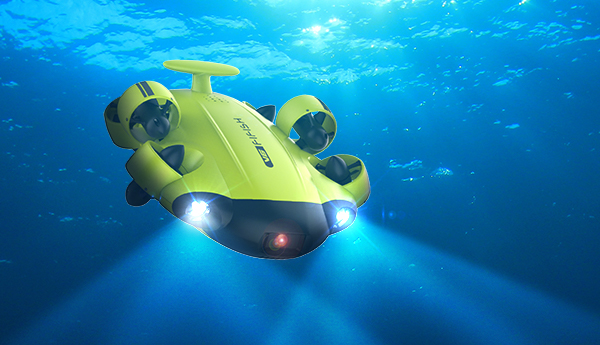
Water drones, also known as underwater drones or ROVs (Remotely Operated Vehicles), are a type of unmanned, remotely controlled vehicle designed to operate underwater. They are used for a variety of applications, ranging from recreational activities like underwater exploration to more technical uses in research, inspection, and even underwater mapping.They are also known as sea drones, boat drones, dorne ships.
TYPES OF WATER DRONES
Underwater Drones (ROVs)
These drones are specifically designed to operate underwater. They’re often tethered to a control unit but can also be autonomous. They are used for:
- Scientific Research: To explore deep-water ecosystems, coral reefs, or other aquatic environments.Marine Exploration: These drones can dive to great depths to study underwater shipwrecks, geological formations, or other oceanic features.Industrial Use: Inspection of underwater infrastructure like oil rigs, pipelines, and cables.Search and Recovery: Used in underwater search missions, often to recover lost objects or people.
Aerial Water Drones (Water-Resistant Drones)
These are drones designed for use over water, which can either land on the water’s surface or simply be operated above it. They are typically used for:
- Aerial Photography/Videography: Capturing aerial shots of bodies of water like oceans, lakes, or rivers.Monitoring and Surveying: Used by researchers, environmentalists, or maritime authorities to monitor water quality, wildlife, and other environmental factors.Search and Rescue: Water drones can assist in locating people in distress or performing surveillance over large areas of water.Fishing: Some water drones are designed to help with scouting fishing spots or deploying equipment for anglers.
APPLICATION
- Environmental Monitoring: Monitoring the health of aquatic ecosystems, including tracking pollution, water temperature, and wildlife.
- Filmmaking and Photography: Capturing stunning underwater footage or unique aerial perspectives of large bodies of water.
- Industrial Inspections: Checking the integrity of submerged structures like piers, ships, and subsea pipelines.
- Recreational Use: Hobbyists can use water drones for leisure activities like fishing or exploring lakes, rivers, and oceans.
WATER DRONES ARE USED IN
- Environmental monitoring
- Military
- Infrastructure inspectio
- Scientific research
- Ship maintenance
PROS OF WATER DRONES
Versatility in Applications
- Aerial Water Drones: Can be used for aerial photography, surveying water bodies, monitoring wildlife, and disaster management. They are great for capturing high-quality footage of landscapes, wildlife, and activities like boating or swimming.
- Underwater Drones: Useful for underwater surveying, marine biology studies, infrastructure inspection (e.g., oil rigs, underwater cables), search and rescue missions, and environmental monitoring.
High-Quality Imaging
- Many water drones come equipped with high-resolution cameras (HD, 4K) that provide excellent quality visuals for both above and below the water surface. These images are crucial for documentation, monitoring, and inspection purposes.
Safety and Risk Reduction
- Search and Rescue: Water drones are widely used in search-and-rescue missions to locate drowning victims or missing objects without putting human lives at risk.
- Infrastructure Inspections: Underwater drones can inspect ships, pipelines, and underwater structures, reducing the risk to human divers and eliminating the need for expensive, specialized equipment.
Cost-Effectiveness
- Lower Operational Costs: Compared to traditional methods like hiring human divers, renting specialized underwater vehicles, or using boats for surveillance, water drones are often more cost-effective. They can operate with minimal staffing and without the need for complex equipment.
Ease of Deployment
- Water drones, especially the aerial types, are easy to deploy. They don’t require large vessels or special setups and can be launched quickly for short-term missions, such as taking quick aerial photos or mapping a specific underwater area.
CONS OF WATER DRONES
Limited Battery Life
- Water drones typically have limited battery life, ranging from 20-30 minutes for aerial drones to 1-4 hours for underwater drones, depending on usage. For longer missions, frequent recharging or battery swaps may be required, limiting their operational time.
Weather and Environmental Challenges
- Aerial Water Drones: They can be affected by adverse weather conditions like high winds, heavy rain, or snow, making flight difficult or dangerous. Water surfaces can also be turbulent, adding challenges to stability and camera quality.
- Underwater Drones: They may struggle in deep or murky water, where visibility is poor. In addition, high currents, deep dives, or unpredictable ocean conditions can complicate operations.
Depth and Range Limitations
- Underwater drones have a limited operational depth, and diving deeper requires specialized equipment, stronger pressure-resistant housing, and more powerful thrusters. Many consumer-grade underwater drones can only operate in shallow depths, limiting their usefulness in some marine environments.
Signal and Communication Constraints
- Aerial Drones: While they generally have good communication and control over the surface, they can face challenges if the control signal is disrupted by water surfaces, tall obstacles, or long-range limitations.
- Underwater Drones: Communication can be significantly hindered underwater. While tethered drones use cables for data and power transmission, wireless communication is difficult underwater beyond very shallow depths due to the high density of water that interferes with radio frequencies.
Cost of High-End Models
- While basic water drones may be affordable, high-end models with advanced capabilities (e.g., sonar, high-quality cameras, deep-water capabilities, and autonomous navigation) can be quite expensive, limiting their accessibility for hobbyists or small organizations.