
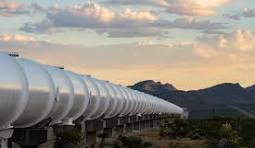
VIRGIN HYPERLOOP
INTRODUCTION:
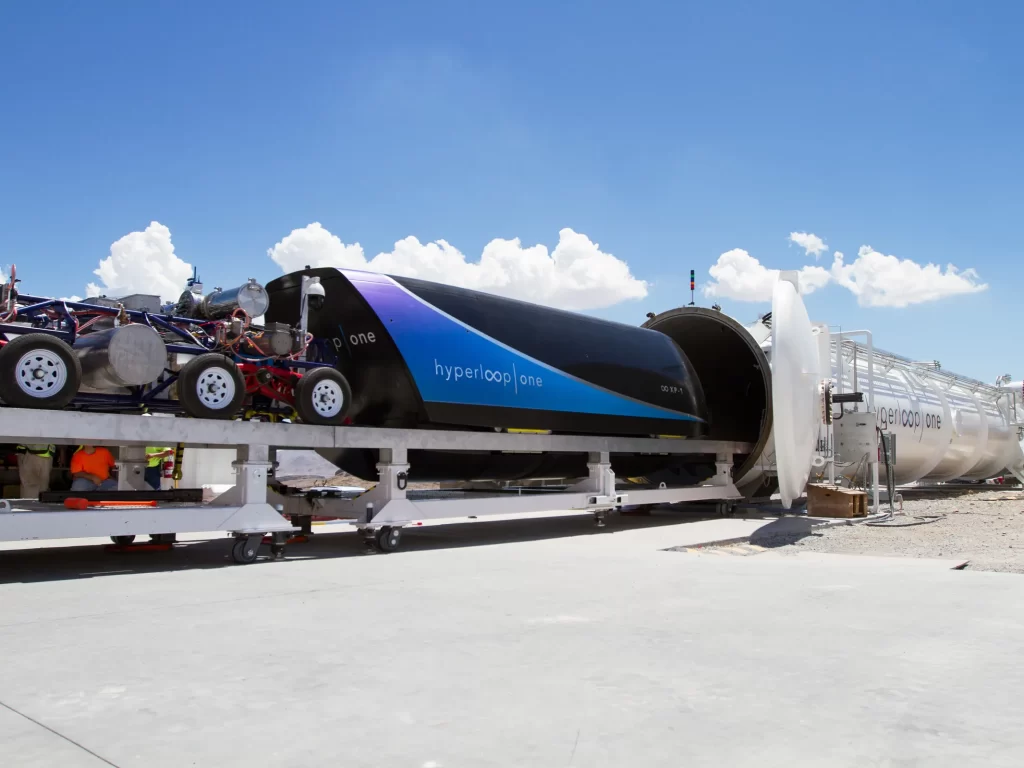
Hyperloop is a proposed high-speed transportation system for both passengers and freight.
Virgin Hyperloop One, passengers and cargo will be loaded into a pod, and accelerate gradually via electric propulsion through a low-pressure tube. The pod quickly lifts above the track using magnetic levitation and glides at airline speeds for long distances due to ultra-low aerodynamic drag. We’re incredibly excited about the technology behind Virgin Hyperloop One and the way it could transform passengers’ lives.
WORKING OF VIRGIN HYPERLOOP:
- Virgin Hyperloop uses a ‘near-vacuum’ environment within a tube, which enables high speeds, low power consumption, and almost completely removes aerodynamic drag. Inside the tube, battery-powered pods glide at speeds of up to 670mph. For passengers on board, it’s a comfortable, quiet and safe experience.
- Pods travel in convoys. Unlike trains, the pods are not connected to one another, meaning each one can have a different destination. Pods take an exit similar to a highway off-ramp, while the rest of the convoy continues on its route.
- With no moving parts on the track and levitation and guidance on the top of pods, they can switch directions at high speeds and join and leave convoys seamlessly. These innovations not only allow pods to travel at ultra-fast speeds but also provide on-demand, direct-to-destination service. Hyperloop will carry tens of thousands of passengers per direction per hour at aeroplane speeds, with zero direct emissions.
APPLICATIONS USED IN VIRGIN HYPERLOOP:
- 1. Vacuum Technology:
- Purpose: The Hyperloop pods travel in low-pressure tubes to reduce air resistance. To achieve this, the system uses powerful vacuum pumps that maintain a near-vacuum environment inside the tubes.
- Applications: High-efficiency vacuum pumps and air compressors to reduce the friction and drag that normally hinder high-speed travel.
- 2. Magnetic Levitation (Maglev):
- Purpose: To reduce friction between the pods and the track, Virgin Hyperloop employs magnetic levitation technology, where magnetic fields lift the pods slightly above the track.
- Applications: Superconducting magnets and electromagnets to create lift and propulsion, allowing the pods to glide smoothly without physical contact.
- Purpose: To reduce friction between the pods and the track, Virgin Hyperloop employs magnetic levitation technology, where magnetic fields lift the pods slightly above the track.
- 3.Control Systems & Software:
- Purpose: Highly sophisticated control systems are necessary to monitor and control the movement of pods, including speed, route adjustments, and safety protocols.
- Applications: AI and machine learning algorithms are employed for real-time control and diagnostics, ensuring safe, efficient, and smooth operations of the system.
- Purpose: Highly sophisticated control systems are necessary to monitor and control the movement of pods, including speed, route adjustments, and safety protocols.
- 4. Electric Propulsion:
- Purpose: Virgin Hyperloop uses electric propulsion systems, which are both energy-efficient and environmentally friendly.
- Applications: Electric motors and power electronics to generate thrust and maintain optimal efficiency while being powered by renewable energy sources.
- 5.. Sustainability & Energy Systems:
- Purpose: The Virgin Hyperloop system is designed to be energy-efficient, potentially running on renewable energy sources such as solar and wind.
- Applications: Solar panels, energy storage systems, and regenerative braking to harvest and store energy during deceleration.
- 6. Advanced Materials:
- Purpose: To build lightweight, durable, and efficient infrastructure and pods, Virgin Hyperloop uses advanced materials like carbon fiber composites and aluminum alloys.
- Applications: The use of ultra-light, high-strength materials ensures that the pods can travel faster and with more efficiency while minimizing wear and tear on the system.
- 7. Passenger Experience Systems:
- Purpose: Virgin Hyperloop places great importance on the comfort and safety of passengers.
- Applications: Advanced environmental control systems, noise cancellation technology, lighting, and smart interiors to provide passengers with an enhanced and comfortable travel experience.
- 8. Autonomous Control Systems:
- Purpose: The Hyperloop system is planned to be largely autonomous, meaning that it can operate without human intervention in terms of controlling speed and direction.
- Applications: Artificial intelligence (AI) and real-time data analytics to ensure precise control, optimize routes, and adapt to traffic conditions
PROS AND CONS OF VIRGIN HYPERLOOP:
Pros
Fast, efficient and cheap to operate
Average speeds of around 600 mph (970 km/h), with a top speed of 760 mph (1,200 km/h)
Low power consumption
Uses Solar Energy for power
Open-sourced, encouraging others to take the ideas and further develop them.
Hyperloops tubes are protected from the weather, birds, objects on railroad tracks.
In the event of equipment or electrical failure, the system comes to a stop (does not fall from the sky).
Automation reduces the risk of human error
Promotes economic growth around the Hyperloop route
Reduced freight costs and times
Cons
High cost of development and construction
Susceptible to disruption from earthquakes, power outages or terror attacks
No sharp curves or abrupt height changes in the route
Potential for rapid decompression of the tube or passenger space
Vibration and jostling caused by high speeds
People will not be able to move freely during travel (no bathroom?)
Unproven system