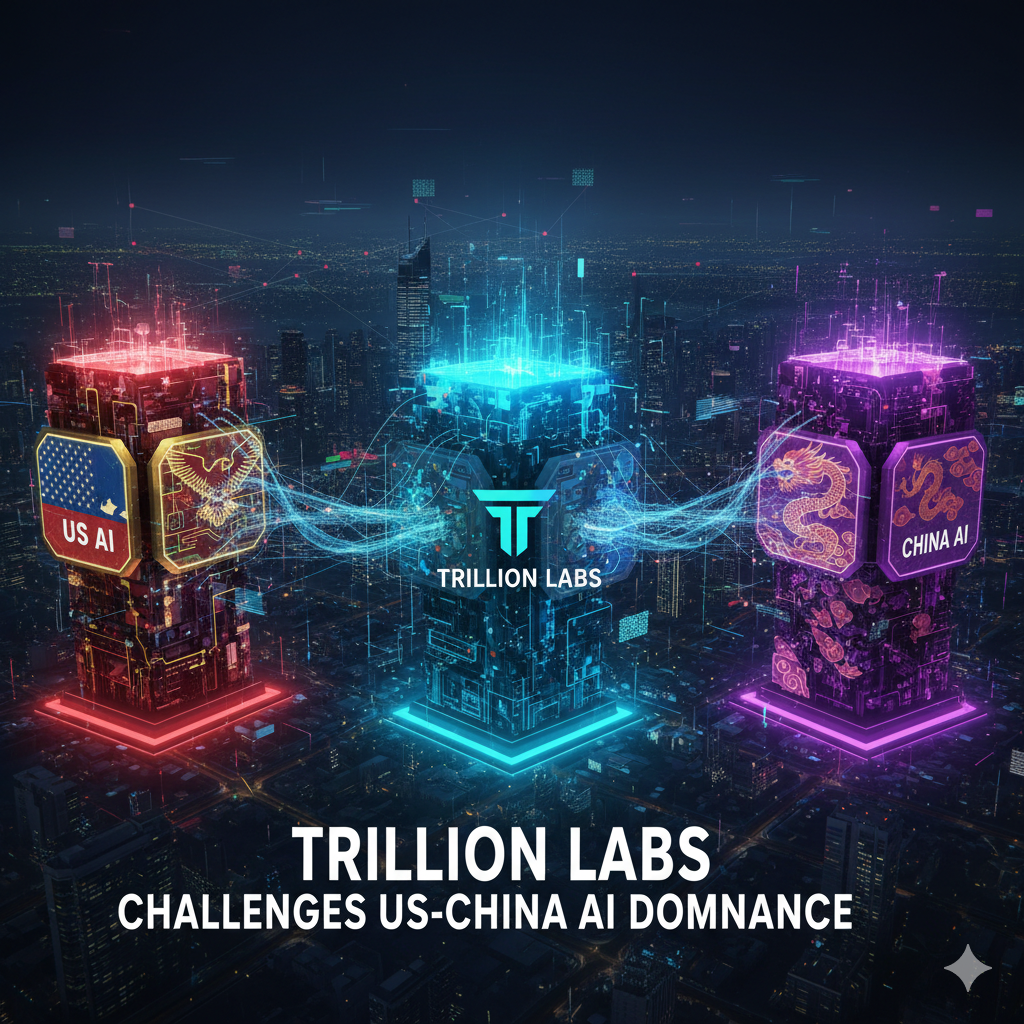
Trillion Labs Challenges US- AI Dominance
Seoul, South Korea — In a global artificial intelligence landscape long dominated by the United States and China, a rising South Korean startup — Trillion Labs — is emerging as a new challenger in the push for AI leadership, signaling a shift toward a more multipolar AI ecosystem.
Founded in 2024 in Seoul, Trillion Labs is building advanced foundation models tailored to Korean and Asian languages — a strategic niche that could help nations outside the traditional US‑China axis stake a claim in the AI revolution.
A New Contender in the AI Race
While US and Chinese tech giants have been the headline players in artificial intelligence, leveraging vast datasets, massive computation and deep pockets to release cutting‑edge models, the global AI race is evolving. American labs are pushing open models to counter China’s influence, and Chinese firms continue aggressive investment and expansion strategies.
In this competitive context, Trillion Labs is carving a unique path:
-
It focuses on building efficient multilingual large language models (LLMs) with strong performance in Korean and other Asian languages, designed to bridge linguistic and cultural gaps in AI applications.
-
The startup positions its work as part of “AI sovereignty” — reducing reliance on Western or Chinese models and embedding AI infrastructure within Korean innovation ecosystems.
From Local Expertise to Global Ambitions
Trillion Labs has attracted attention beyond its home market:
-
It was selected to join the 2025 AWS Generative AI Accelerator, a global program that supports leading AI startups with cloud credits, mentorship and exposure to international partners — a significant milestone against fierce global competition.
-
The company has made strides in model scale and transparency, previously open‑sourcing large AI model checkpoints, enabling collaboration and research participation worldwide.
-
Partnerships with infrastructure providers like CoreWeave have helped accelerate model training and expansion, making it possible to scale without huge capital overhead.
Bringing AI development in Korean and Asian contexts into the broader AI conversation, Trillion Labs underscores how regional innovation can contribute to diversifying the global technology landscape.
Why This Matters Beyond Seoul
The rise of Trillion Labs shows that the AI race is no longer confined to a binary US‑China competition. Nations and startups across Asia and beyond are developing competitive technologies that reflect local languages, cultures, and economic priorities — from low‑resource language models to open research collaborations.
As Trillion Labs builds momentum, it joins a broader trend in AI innovation where distributed research communities, open‑source models and regional champions challenge established centers of power. This trend not only fuels competition but also pushes for greater inclusivity and diversity in AI development — a crucial factor as artificial intelligence continues to integrate into global society.
In an era where technological leadership has strategic, economic and geopolitical significance, the emergence of new players like Trillion Labs marks a pivotal shift: the center of gravity in AI may be expanding beyond the traditional US‑China duopoly.