
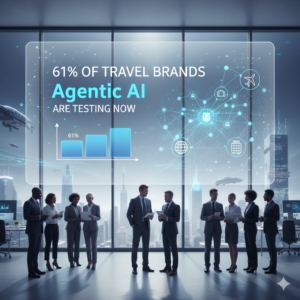
Global Travel Sector — A growing number of travel companies are exploring agentic artificial intelligence (AI) — systems that go beyond traditional generative outputs to act autonomously on behalf of users and businesses. According to the latest industry research, 61% of travel brands surveyed are either experimenting with or actively scaling agentic AI technologies in their operations — a sign that next‑generation automation is moving to the forefront of the sector’s digital strategy.
What Agentic AI Means for Travel
Agentic AI refers to advanced AI systems that can interpret user intent and complete real‑world tasks — such as planning or booking travel — with minimal human oversight. This is distinct from older AI tools that only assist by generating content or insights.
Travel brands are testing these capabilities in areas such as:
-
Dynamic itinerary planning and personalized recommendations
-
Automated pricing and booking actions
-
Backend productivity improvements across operations
Companies surveyed include airlines, hotel groups, online travel agencies and tour operators. The trend reflects broader momentum in the travel industry toward more efficient and autonomous digital services.
Industry Demand and Consumer Trends
The push toward agentic AI comes as consumers show increasing exposure to AI tools in travel and beyond. In markets like India, around one in three consumers already use agentic AI, with many planning adoption over the next year — a pattern that signals rising familiarity and demand for autonomous digital assistants.
Brand‑level interest isn’t limited to travel: a recent marketing study finds that about half of organizations across sectors plan to invest in agentic AI within the next year, even if fewer have fully deployed it yet.
Challenges and Cautions
While experimentation is widespread, industry observers note that true scaling of agentic AI use cases — especially those that interact directly with customers — remains uneven. Travel brands often grapple with data governance, customer trust, and operational integration hurdles as they take early steps toward autonomous systems.
Looking Ahead
As travel companies extend their exploration of agentic AI beyond pilots and proofs of concept, experts say the next phase will focus on safe, scalable deployments that deliver real value to businesses and travelers alike. How quickly these technologies mature — and customer comfort grows — will be key to shaping the future of automated travel services.