
INTRODUCTION:
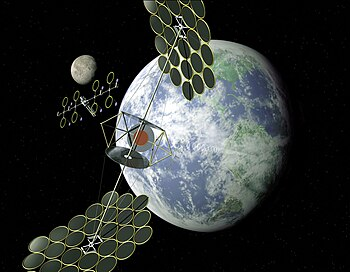
Space-Based Solar Power (SBSP) is a concept that involves collecting solar energy in space using satellites and then transmitting it to Earth. The idea capitalizes on the fact that space is an ideal environment for capturing solar energy — it’s free from the atmospheric interference (cloud cover, pollution, or nighttime) that limits the efficiency of Earth-based solar power systems.
Various SBSP proposals have been researched since the early 1970s, but as of 2014 none is economically viable with the space launch costs. Some technologists propose lowering launch costs with space manufacturing or with radical new space launch technologies other than rocketry.
WORKING:
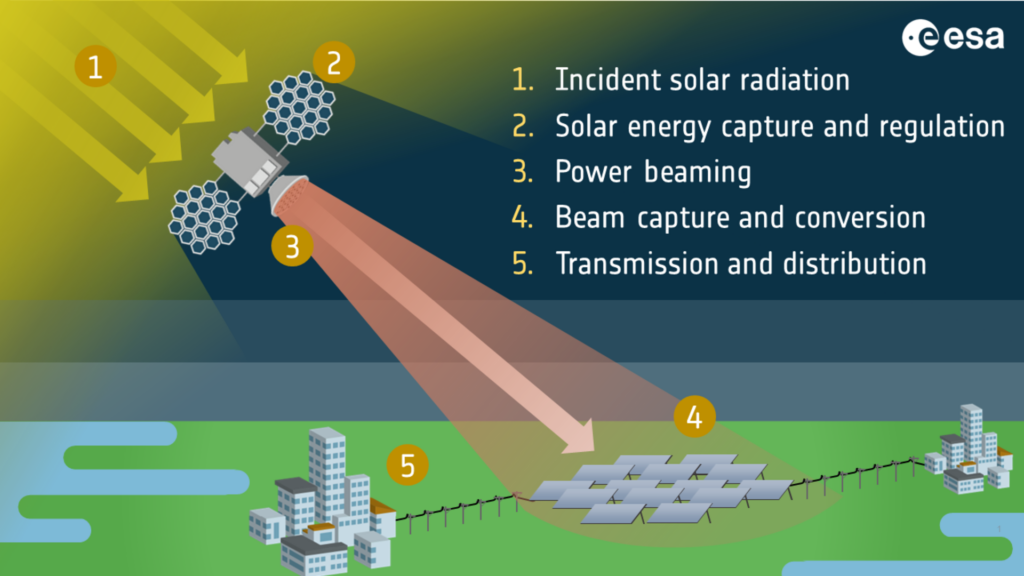
Solar Collection: A large solar array or set of photovoltaic panels are placed in space, typically in geostationary orbit or low Earth orbit. These panels would continuously collect solar energy from the Sun without interruption due to day/night cycles or weather conditions.
Conversion to Microwave or Laser: The collected solar energy would then be converted into a microwave or laser beam. These forms of energy are chosen because they can be easily transmitted over long distances through the vacuum of space without significant losses.
Transmission to Earth: The microwave or laser beam would be directed toward a receiver station on Earth, where it would be converted back into electricity. These stations could be located in remote areas to minimize risks to human populations in case of malfunctions.
Power Distribution: Once received on Earth, the electricity would be integrated into the existing power grid, providing a continuous and stable power source.
ADVANTAGE:
- Clean energySBSP is a clean and sustainable energy source that produces almost zero hazardous waste
- Global distributionSBSP can deliver power to many markets by switching to different base stations
- Energy securitySBSP can help reduce reliance on fossil fuels and provide energy independence to isolated locations
- Technological progressSBSP can lead to new technologies in wireless power beaming, in-space assembly, and photovoltaics
DISADVANTAGE:
- High initial costs: The cost of launching solar panels and other materials into space is very high
- Inefficiency: Converting electricity into microwaves and back is inefficient
- Debris: SBSP plants could create a large amount of debris at the end of their life
- Safety: Microwave beams in space could be turned into weapons of mass destruction
- Environmental and ethical concerns: Some argue that the production of solar panels and the placement of satellites in orbit may create hazardous by-products