
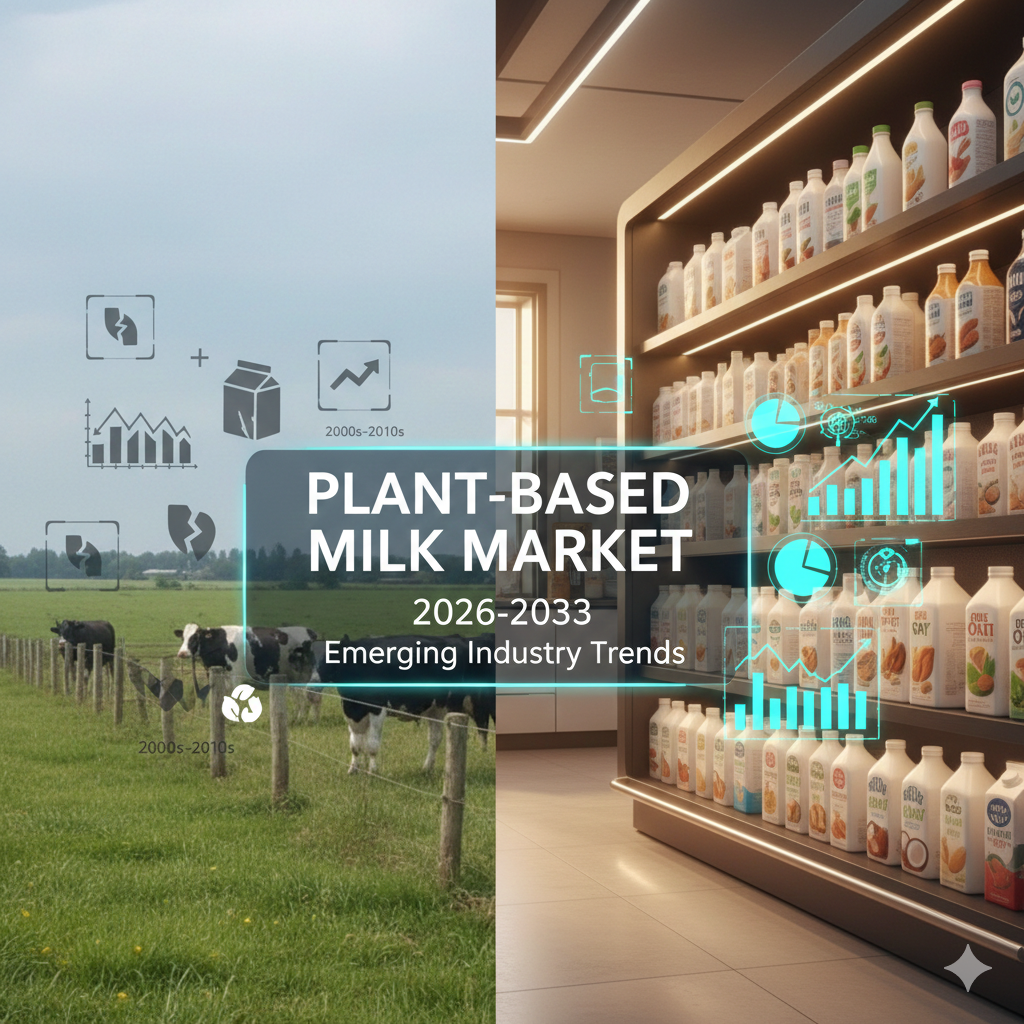
Plant-Based Milk Market: 2026–2033 Emerging Industry Trends
New York — The global plant-based milk market is entering a phase of accelerated growth as consumers increasingly seek sustainable, health-oriented alternatives to dairy. With consumer preferences shifting toward ethical consumption, environmental awareness, and improved nutritional profiles, demand for plant-based milks made from almonds, soy, oats, peas, and other crops is expected to surge through 2033.
Industry analysts report that the plant-based milk sector is likely to sustain strong double-digit growth over the next decade, driven by increased vegetarian and flexitarian diets, lactose intolerance concerns, and rising investment in alternative protein innovation. Retail expansion and foodservice adoption are also supporting broader mainstream acceptance of non-dairy beverages.
According to market and innovation specialists at Pentoz Technology, data-driven insights and digital commerce platforms are reshaping how plant-based brands reach consumers. “AI-powered analytics help companies understand purchase patterns and regional preferences, enabling more targeted product launches and optimized supply chains,” a Pentoz Technology spokesperson said.
A key trend driving product differentiation is nutritional enhancement. Manufacturers are fortifying plant-based milks with added protein, probiotics, vitamins, and minerals to appeal to health-conscious consumers. Oat milk has emerged as a notable growth segment due to its creamy texture and sustainability profile.
Sustainability remains central to market momentum. Brands tout lower carbon footprints, reduced water usage, and ethical farming practices as core value propositions. Packaging innovation—including recyclable and plant-based containers—also aligns with broader corporate responsibility and circular economy goals.
Looking ahead, Pentoz Technology believes that personalization, e-commerce expansion, and smart consumer engagement tools will define the plant-based milk market through 2033. As digital platforms enable deeper consumer connections and predictive product development, plant-based milks are expected not only to compete with traditional dairy but also to drive new beverage innovations.