
INTRODUCTION
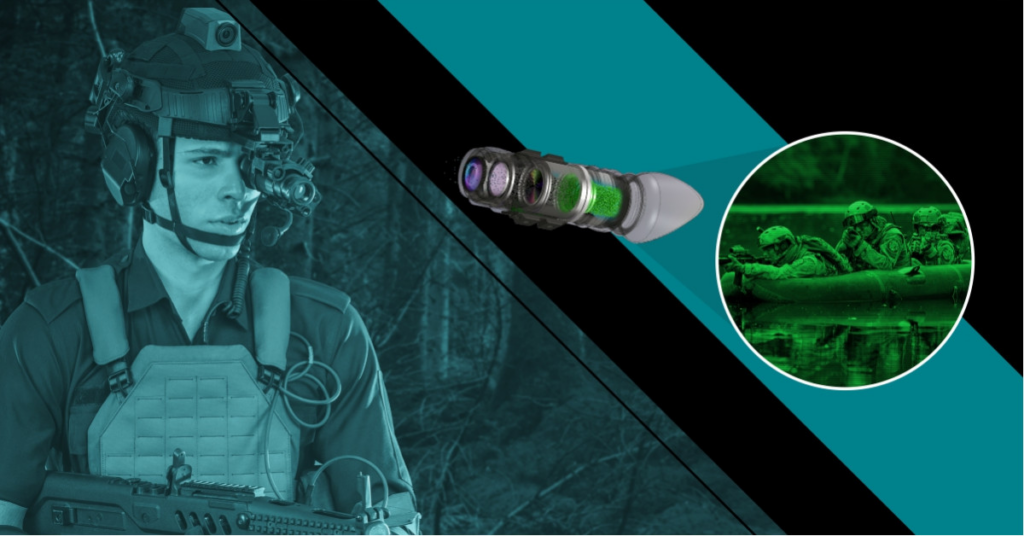
Night vision devices (NVDs) are tools that allow individuals to see in low-light or complete darkness by amplifying available light or using infrared technology. A NVD is an optoelectronic devices that helps people to see in low light conditions. They are widely used in various fields, from military and law enforcement to recreational activities like hunting, wildlife observation, and security surveillance.
HOW NIGTH VISION DEVICES WORKS
- Image Intensification (Amplification):
Principle: These devices work by gathering ambient light (e.g., moonlight, starlight) through the objective lens and amplifying it to create a brighter image on the eyepiece.
How it works: The incoming light hits a photocathode, which converts the light into electrons. These electrons are then accelerated and hit a phosphor screen that converts them back into visible light, creating a clearer, brighter image of the scene.
- Thermal Imaging (Infrared):
Principle: Thermal night vision devices detect heat emitted by objects (infrared radiation). These devices don’t rely on light but instead measure the infrared radiation from warm objects and convert it into a visible image.
How it works: The device’s infrared sensor detects temperature differences in the environment. Hot objects (e.g., humans, animals, vehicles) appear bright, while cooler objects (like the background or foliage) appear darker.
TYPES OF NIGHT VISION DEVICES
- Generation 1 (Gen 1)
- Technology: Gen 1 devices use a simple image intensifier tube to amplify available light.
- Performance: These devices provide a relatively low-quality image but are good for basic use in low-light conditions.
- Range: Effective up to about 75 yards.
- Cost: Gen 1 devices are generally the most affordable, making them ideal for casual users.
- Limitations: Image quality is lower compared to newer generations, with visible distortion and lower clarity.
- Generation 2 (Gen 2)
- Technology: Gen 2 devices use an improved image intensifier tube that includes a microchannel plate (MCP) to increase light amplification.
- Performance: Better image clarity and brightness than Gen 1, with less distortion and more detail.
- Range: Effective up to about 150 yards.
- Cost: More expensive than Gen 1, but still affordable for many professionals and enthusiasts.
- Advantages: Higher resolution and contrast, allowing for more accurate observation in dark conditions.
- Generation 3 (Gen 3)
- Technology: Gen 3 devices use an MCP and an auto-gated power supply to provide enhanced performance in varying light conditions. They also use a gallium arsenide photocathode, which provides a higher resolution and better sensitivity to light.
- Performance: The highest image quality, providing bright, clear images in low-light environments.
- Range: Effective up to 300-500 yards or more, depending on the model.
- Cost: Gen 3 night vision devices are the most expensive, often used by military, law enforcement, and professional wildlife observers.
- Advantages: Superior image clarity, better performance in low-light and high-contrast conditions, and increased durability.
- Generation 4 (Gen 4)
- Technology: Gen 4 is an advanced form of Gen 3, with improved components such as filmless technology and increased sensitivity to light. It also has a longer operational life and performs better in fluctuating light conditions.
- Performance: Offers exceptional image quality and a broad range of uses.
- Cost: Gen 4 devices are the most expensive and are typically used in very specialized fields.
- Advantages: Provides the highest possible performance for night vision, with superior clarity and durability.
- Thermal Imaging
- Technology: Unlike traditional night vision, thermal imaging detects the infrared radiation (heat) emitted by objects. It creates a heat map with contrasting colors to differentiate warm and cool objects.
- Performance: Thermal devices are useful for detecting heat signatures, such as humans, animals, vehicles, or machinery, even in complete darkness and through smoke or fog.
- Range: Depends on the device, but thermal imagers can detect heat sources at significant distances, often over 1,000 yards.
- Cost: Thermal imaging is generally more expensive than other night vision technologies but provides the advantage of seeing heat signatures.
- Advantages: Can see through darkness, smoke, fog, and other obstructions. It does not require any light source.
APPLICATION
Military and Law Enforcement
- Night vision devices are essential for military and law enforcement operations, allowing personnel to operate effectively in low-light or night-time environments. They are used for surveillance, patrolling, search and rescue, and combat operations.
Wildlife Observation
- Night vision devices help researchers and enthusiasts observe nocturnal animals without disturbing them. This is especially valuable for studying wildlife behaviors, tracking animals, or monitoring endangered species.
Hunting and Fishing
- Hunters use night vision devices to track game in the dark, giving them a tactical advantage during night hunts. Night vision is also used for night fishing and monitoring fishing activity in low-light environments.
Search and Rescue
- In rescue operations, night vision allows search teams to find missing persons or objects in the dark, particularly in areas with no lighting or when visibility is poor.
Home Security and Surveillance
- Night vision is often used in security cameras for home or business surveillance, allowing for 24/7 monitoring, even in complete darkness.
Recreational Activities
- Camping, boating, and adventuring enthusiasts use night vision devices for safety and convenience, helping them navigate and explore in the dark.
PROS OF NIGHT VISION DEVICES
Enhanced Visibility: Night vision allows users to see clearly in the dark without external light sources.
Safety: Essential for security, military operations, search and rescue missions, and wildlife observation.
Wide Range of Uses: Applicable in various fields, including law enforcement, hunting, camping, and surveillance.
Improved Situational Awareness: Helps users to identify potential threats or obstacles in low-light environments.
CONS OF NIGHT VISION DEVICES
Limited Range (Traditional Night Vision): Night vision can sometimes have a limited effective range, particularly for Gen 1 devices.
Cost (Thermal Imaging and High-Gen Models): Advanced night vision devices, such as thermal cameras or high-generation models, are expensive.
Requires Regular Maintenance: Night vision devices, especially traditional image intensifiers, may require maintenance to ensure proper functioning.
Battery Life: Night vision devices can consume a lot of battery power, requiring frequent recharging or battery replacements.