
INTRODUCTION:
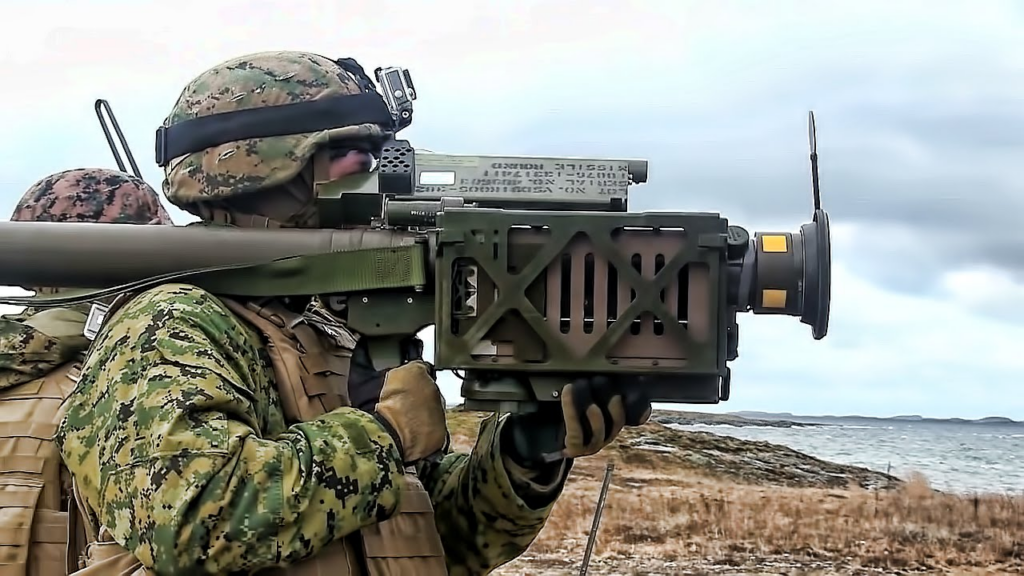
MANPADS (Man-Portable Air-Defence Systems) are lightweight anti-aircraft weapons. They are designed to protect soldiers on the battlefield from attacking aircraft. MANPADS—along with anti-aircraft artillery—were amongst the most effective anti-aircraft weapons deployed by Iraq in the 1991 Gulf War.1
MANPADS are typically small, portable, and can be carried by a single operator. The most common versions use infrared homing or laser guidance to track and target aircraft. They are designed for short-range defense, with most variants capable of engaging targets at distances of up to 6-8 km (about 3-5 miles) and at altitudes between 3,000 and 15,000 feet. These systems allow ground forces, even small infantry units, to defend against aerial threats.
TYPES:
FIM-92 Stinger (USA): One of the most widely known and used systems. It has been used extensively in conflict zones and is capable of targeting both fixed-wing aircraft and helicopters.
9K32 Strela-2 (Russia): A very common Soviet-era system that has been used by many countries and insurgent groups worldwide. It is infrared-guided and has a range of around 3-5 kilometers.
QW-1 Vanguard (China): A Chinese MANPADS similar to the Russian Strela, offering infrared guidance and comparable range and capabilities.
PZR Grom (Poland): A modern European-made system with improved accuracy and tracking systems, used by several nations.
WORKING:
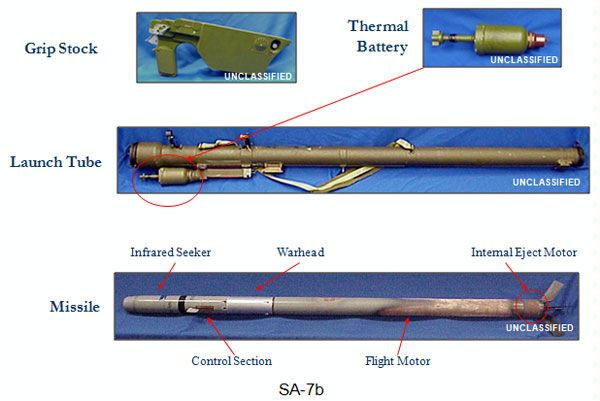
MANPADS generally consist of a small launch tube, a guidance system (usually infrared or laser), and a warhead. Here’s how they work:
- Target Acquisition: The operator acquires the target using either the missile’s infrared sensor or a laser designator.
- Launch: After aiming, the operator fires the missile, which is typically designed for a quick launch and can be fired from a standing, kneeling, or prone position.
- Tracking and Guidance: Infrared homing MANPADS lock onto the heat signature of the target (engine exhaust), allowing the missile to track and follow the aircraft.
- Impact and Detonation: The missile homes in on the target, and once it reaches close proximity, the warhead detonates, aiming to disable or destroy the aircraft.

ADVANTAGE:
- Portability: As the name suggests, MANPADS are designed to be carried by a single individual, often in a compact and lightweight configuration, making them easy to transport, conceal, and use in a wide range of environments.
- Cost-Effective: Compared to other air defense systems (like larger SAMs), MANPADS are generally much more affordable and don’t require extensive infrastructure to deploy.
- Quick to Deploy: They can be used in various tactical situations, even by small, mobile military or insurgent forces. This is especially useful in asymmetric warfare where air superiority is critical.
- Effectiveness Against Low-Flying Aircraft: MANPADS are highly effective against helicopters and aircraft that fly at lower altitudes, particularly in environments where they are vulnerable (e.g., during troop transport, close air support missions).
- Ease of Use: These systems are designed to be operated with minimal training, which makes them accessible for both professional soldiers and irregular forces.
DISADVANTAGE:
1.Limited Range: Compared to larger air defense systems, MANPADS have a limited range (usually between 5-8 km), which makes them less effective against high-flying, fast-moving aircraft.
2.Vulnerability to Countermeasures: Many modern military aircraft are equipped with countermeasures such as flare dispensers, which release heat sources to confuse infrared-guided missiles. In addition, radar-guided systems can be jammed or spoofed.
3.Weather and Environmental Dependence: Infrared-guided systems are dependent on a clear heat signature from the target. Bad weather (rain, fog) or even background heat sources can impact the missile’s accuracy and effectiveness.
4.Collateral Damage: Since MANPADS are often used in populated or urban areas, there is a risk of collateral damage, especially in situations where civilians or friendly forces might be nearby.
5.Misuse by Non-State Actors: The proliferation of MANPADS is a global concern, particularly in conflict zones or terrorist organizations. These systems can fall into the wrong hands, posing a significant security threat to commercial and military aviation.