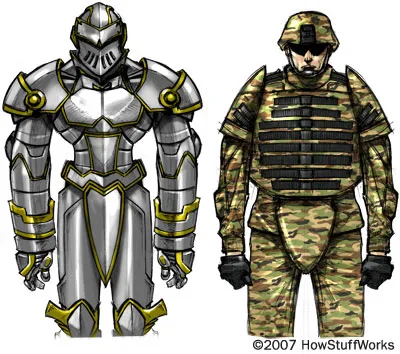
INTRODUCTION:
Exoskeletons for soldiers are wearable devices that enhance a soldier’s strength, endurance, and mobility. They can be made of metal, carbon fiber, or soft materials.
How exoskeletons can help soldiers
- Carry more weight: Exoskeletons can help soldiers carry heavier loads.
- Move faster: Exoskeletons can help soldiers move faster.
- Endure longer: Exoskeletons can help soldiers endure longer periods of physical exertion.
- Reduce fatigue: Exoskeletons can help reduce fatigue.
- Navigate challenging terrain: Exoskeletons can help soldiers navigate challenging terrains and thin oxygen environments.
KEY TECHNOLOGIES:
Exoskeletons for soldiers use a variety of technologies, including actuation, sensors, and materials.
Actuation
- Hydraulic, pneumatic, and electric: These are the most common types of actuation technologies used in exoskeletons.
- Actuators: These generate movement and act as the “muscles” of the exoskeleton.
Sensors
- Movement: These measure the movement of specific limbs.
- Forces and torques: These measure the forces or torques exchanged between the device and the user.
- Bio-signals: These include electromyography signals (EMGs), electroencephalography signals (EEGs), and mechanomyography signals (MMG).
Materials
- Carbon fiber: This is the most suitable material for the exoskeleton frame.
- Kevlar: This is the second most suitable material for the exoskeleton frame.
- Fiberglass: This is another common material used in exoskeleton frames.
Other technologies
- Hinge mechanisms: These conserve energy for heavy lifting.
- Sensor equipment: This monitors the state of the exoskeleton.
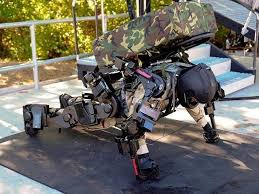
Exoskeletons can help soldiers move quickly, carry heavy loads, and perform repetitive tasks. They can also help soldiers walk while carrying loads, climb stairs, and crawl in confined spaces
ADVANTAGES AND DISADVANTAGES PF EXOSKELETON FOR SOLDIERS:
Advantages:
- Enhanced strength and endurance:
- Exoskeletons can significantly increase a soldier’s ability to carry heavy equipment, climb obstacles, and perform strenuous activities for extended periods without fatigue.
- Reduced physical strain and injury risk :By supporting the body’s joints and muscles, exoskeletons can decrease the risk of musculoskeletal injuries from heavy lifting or prolonged exertion.
- Improved mobility in challenging terrains: Some exoskeleton designs can enhance movement capabilities in difficult environments like rough terrain or rubble.
- Potential for enhanced protection: Certain exoskeleton designs could incorporate additional armor plating for improved ballistic protection.
Disadvantages:
- Mobility limitations :Depending on the design, exoskeletons could restrict natural movement and range of motion, potentially hindering agility in combat situations.
- Comfort issues: Wearing an exoskeleton can be uncomfortable due to the added bulk and pressure points on the body, especially during prolonged use.
- Power source limitations :Battery life can be a significant concern, requiring frequent recharging or battery swaps which could disrupt operations.
- Cost and complexity :Developing and deploying exoskeletons can be expensive, and their maintenance and training requirements could be substantial.
- Integration challenges: Integrating exoskeleton technology with existing military equipment and tactics could be complex and require significant adaptation.
USES OF EXOSKELETON FOR SOLDIERS:
Exoskeletons can help soldiers in many ways, including carrying heavy loads, reducing fatigue, and preventing injuries. They can also help soldiers perform non-combat tasks like loading and unloading equipment.
Carrying heavy loads
- Exoskeletons can help soldiers carry heavy loads, such as armor, weapons, ammunition, and supplies
- They can also help soldiers move large objects, like crates loaded onto cargo planes
Reducing fatigue
- Exoskeletons can help reduce fatigue, especially in high-altitude terrains
- They can also help reduce the risk of injuries
Preventing injuries
- Exoskeletons can help prevent injuries caused by repetitive lifting and pushing tasks
Non-combat tasks
- Exoskeletons can help with non-combat tasks, such as loading and unloading equipment, pushing heavy crates, or handling supplies.
HOW IT WORKS:
A soldier exoskeleton, also called an exo -suit, functions by utilizing powered mechanisms like motors or hydraulics to enhance a soldier’s physical capabilities, allowing them to carry heavier loads, move faster, and reduce fatigue by providing additional strength and support to their limbs and body, essentially acting as an external skeleton that augments their natural movements; these exoskeletons can be either active (powered by motors) or passive (using springs and mechanics to redistribute weight) depending on the desired function.
Key aspects of how a soldier exoskeleton works:
- Sensors and Motion Detection: Sensors embedded in the exoskeleton detect the soldier’s movements and intentions, allowing the system to synchronize its assistance with the user’s actions.
- Actuators: These are the “muscles” of the exoskeleton, typically electric motors or hydraulic cylinders, which generate force to assist with lifting, walking, running, or other movements depending on the design.
- Power Source: Batteries power the actuators, with considerations for weight and run time depending on the mission.
- Joint Design: The exoskeleton’s joints mimic the human body’s joints, allowing for natural movement while providing additional support and power.
- Load Distribution: By transferring weight from the soldier’s muscles to the exoskeleton’s frame, the suit can significantly reduce strain on the body, especially when carrying heavy equipment.
Types of Soldier Exoskeletons:
- Lower Body Exoskeletons: Primarily focus on supporting the legs, enhancing walking ability on difficult terrain, and reducing fatigue during long marches.
- Upper Body Exoskeletons: Assist with lifting and carrying heavy objects, potentially providing a significant advantage in situations requiring manual labor.
- Full-Body Exoskeletons: Combine upper and lower body support, offering the most comprehensive physical enhancement.
Potential Benefits for Soldiers:
- Increased Strength and Endurance: Ability to carry heavier loads for extended periods.
- Improved Mobility: Enhanced movement on challenging terrain.
- Reduced Fatigue and Injury Risk: Less strain on muscles and joints, potentially decreasing the risk of musculoskeletal injuries.
- Tactical Advantages: Faster movement and ability to perform tasks requiring greater physical exertion.
Challenges in Exoskeleton Development:
- Power Consumption: Balancing battery life with the power needed for effective assistance.
- Weight and Bulk: Designing a lightweight and comfortable exoskeleton that doesn’t hinder movement.
- Control Systems: Developing sophisticated algorithms to seamlessly integrate with the user’s movements.