
Distributed Electric Propulsion (DEP) technology is an innovative approach to aircraft propulsion that involves the use of multiple small, electrically-driven propellers or motors distributed across the aircraft’s airframe. Rather than relying on one or a few large engines, DEP spreads the propulsion across several points, often integrated into the wings or fuselage. This technology is being explored for various applications, including urban air mobility (UAM), electric aircraft, and hybrid-electric propulsion systems for both civilian and military aviation.

HOW IT WORKS:
1. Electric Motors and Propellers
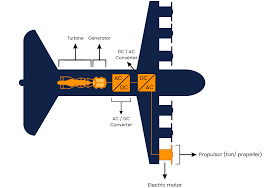
- Multiple Motors: Instead of relying on one or two large engines, DEP uses several smaller electric motors distributed across the airframe. These motors are usually located on the wings, tail, or fuselage to provide thrust at multiple points.
- Electric Propellers: Each motor is connected to a propeller or fan, which generates thrust. These motors are electrically driven, typically powered by batteries, fuel cells, or a hybrid power system.
- Distributed Thrust: By distributing the thrust across multiple points, the aircraft benefits from a more even and efficient airflow. This helps in reducing drag and optimizing aerodynamic efficiency.
2. Electric Power Source
- The motors are powered by an electric power source, such as lithium-ion batteries, solid-state batteries, fuel cells, or a hybrid system (combining both conventional and electric power).
- The electric motors are more efficient than traditional internal combustion engines and produce less vibration, less noise, and lower emissions.
3. Energy Distribution
- A power management system distributes the energy from the power source (like batteries or fuel cells) to the motors. The system ensures that all motors are receiving the correct amount of power for thrust and control.
- Advanced electrical systems handle the regulation of power, ensuring that the distribution is balanced for smooth and safe flight.
4. Flight Control and Maneuverability
- In a DEP system, the thrust vectoring and control are accomplished by adjusting the speed of individual motors. This allows for enhanced maneuverability and stability during flight.
- For example, in some designs, motors can be operated at different speeds to control roll, pitch, and yaw, giving the aircraft the ability to tilt, adjust course, and stabilize more effectively than conventional systems.
5. Lift Generation
- Many DEP aircraft, especially electric vertical takeoff and landing (eVTOL) designs, use multiple small motors to generate lift. This allows these aircraft to take off and land vertically (like a helicopter) and transition into horizontal flight (like a plane).
- The motors may be used for both lifting the aircraft off the ground during takeoff and maintaining forward propulsion during flight. In some designs, the motors tilt or rotate to achieve different flight phases (vertical to horizontal).
EXAMPLE:
- NASA SCEPTORThis project retrofitted an existing light aircraft with DEP. The result was an aircraft that used less energy at cruise.
- AeroVironment HALSOL/Pathfinder/HeliosThese projects used DEP to create lightweight, high aspect ratio solar-powered aeroplanes.
ADVANTAGE:
- Efficiency: DEP can improve efficiency by reducing drag and optimizing thrust distribution.
- Redundancy: Multiple smaller engines can improve safety.
- Design flexibility: DEP can lead to innovative aircraft designs and better integration with aerodynamic features.
- Aeroelasticity: Distributing electric motors along a wing can make the wing lighter.
- Propulsive efficiency: DEP can improve propulsive efficiency by integrating electrically-driven propulsors for boundary-layer ingestion.
DISADVANTAGE:
- Complexity: DEP can increase the complexity of design, manufacturing, and maintenance.
- Weight: The additional components can add weight.
- Cost: DEP can have higher initial costs due to the need for more engines and advanced control systems.
- Structural complexity: DEP can lead to a body that’s very different from the conventional tube and wing.