
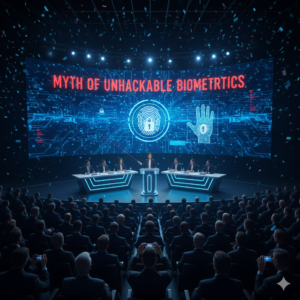
Biometric security systems — such as fingerprint scanners, facial recognition, and iris scans — are often marketed as “unhackable” and more secure than passwords. But cybersecurity experts warn that this belief is largely a myth. While biometrics add convenience and an extra layer of protection, they are not immune to cyberattacks or misuse.
Why Biometrics Feel More Secure
Unlike passwords or PINs, biometric data is unique to each individual. You can forget a password, but you cannot forget your fingerprint. This uniqueness creates the impression that biometric systems are foolproof. Many smartphones, banking apps, and government services now rely on biometrics for authentication.
However, uniqueness does not mean invulnerability.
How Biometric Systems Can Be Compromised
Biometric systems can be hacked or bypassed in several ways:
-
Spoofing Attacks: Hackers have successfully used high-resolution photos, 3D masks, or artificial fingerprints to trick facial and fingerprint scanners.
-
Data Breaches: If biometric data stored in a database is stolen, it cannot be “reset” like a password. Once compromised, the risk is permanent.
-
Sensor Manipulation: Poor-quality scanners or improperly configured systems can be fooled more easily.
-
AI-Generated Deepfakes: Advanced AI tools can replicate faces and voices with high accuracy, raising new security concerns.
These vulnerabilities show that biometric systems depend heavily on the quality of hardware, encryption methods, and system design.
The Privacy Risk
Beyond hacking, biometrics also raise serious privacy concerns. Biometric data is highly sensitive personal information. If governments or corporations misuse or poorly protect this data, individuals may face surveillance risks or identity theft.
Unlike passwords, biometric traits are permanent. If stolen, you cannot change your fingerprint or iris pattern.
A Layer, Not a Silver Bullet
Security experts recommend treating biometrics as one layer of security, not a complete solution. The safest systems combine biometrics with additional safeguards such as multi-factor authentication (MFA), encryption, and behavioral monitoring.
Biometrics can improve convenience and enhance protection when implemented properly. But calling them “unhackable” creates a false sense of security.
The Reality
The myth of unhackable biometrics overlooks an important truth: no security system is perfect. As technology advances, so do cyber threats. Strong cybersecurity requires continuous updates, layered defenses, and informed users — not blind trust in any single authentication method.