
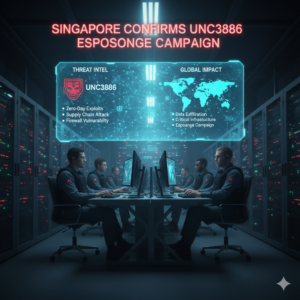
Singapore — The Cyber Security Agency of Singapore (CSA) has publicly confirmed that a sophisticated cyber espionage group known as UNC3886 carried out a targeted campaign against the city‑state’s telecommunications infrastructure. The disclosure marks one of the most high‑profile cyber defence incidents in Singapore’s history and highlights persistent threats to critical digital infrastructure.
What Happened
According to official statements, all four major telecommunications operators in Singapore — Singtel, StarHub, M1 and Simba Telecom — were targeted by UNC3886 in a long‑running intrusion campaign that was detected in 2025 but only publicly detailed in early 2026.
-
The attackers gained access to portions of telecom networks and managed to exfiltrate a small amount of technical data related to network operations, but there is no evidence that sensitive customer personal data was accessed or stolen.
-
The campaign involved advanced techniques, including zero‑day exploitation and stealthy malware to persist within systems and evade detection.
-
Singapore authorities say services were not disrupted and core systems — including 5G core infrastructure — remained secure.
Who Is UNC3886?
UNC3886 is described by cybersecurity experts at firms such as Mandiant as an Advanced Persistent Threat (APT) group with a “China‑nexus” — meaning it’s believed to have links or origins associated with Chinese cyber operations. The group has been active since at least 2022 and has been tied to campaigns targeting telecoms, defence and technology sectors in the U.S. and Asia.
National Response — Operation Cyber Guardian
Singapore’s government and industry partners launched a coordinated response operation, Operation Cyber Guardian, involving more than 100 cyber defenders across multiple agencies, including the CSA, the Infocomm Media Development Authority (IMDA) and the Digital and Intelligence Service.
Officials emphasised that the extensive collaboration helped contain the threat and prevent deeper penetration into critical infrastructure, showcasing enhanced cyber‑defence capabilities.
Security Context and Impact
While no major outages or data breaches occurred, the incident underscores that nation‑state‑level cyber espionage remains a pressing risk for highly connected economies such as Singapore’s. Authorities warn that the sophistication and persistence of UNC3886’s tactics — such as exploiting unknown vulnerabilities and erasing forensic traces — highlight the necessity of ongoing vigilance and investment in cyber resilience.
Analysts say that such espionage campaigns are typically designed to collect technical and strategic intelligence rather than immediately disrupt services — a hallmark of APT operations focused on long‑term access and strategic advantage.