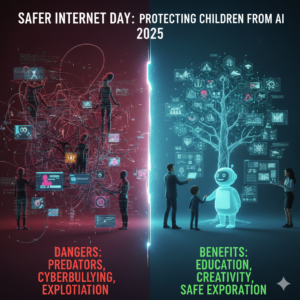
Dublin, Ireland — On Safer Internet Day 2026 (Feb 10), global authorities, tech firms and child‑safety organisations are sounding the alarm about the risks artificial intelligence (AI) poses to children online, even as they recognise the significant benefits of smart technologies. Across Europe, North America and beyond, the focus this year is squarely on mitigating harms while empowering young people to navigate the digital world safely.
AI Risks Top of the Safety Agenda
This year’s Safer Internet Day theme, “Smart tech, safe choices,” highlights concerns that rapidly advancing AI — including generative models that can create images, videos and text — may expose children to new forms of harm if not carefully managed. Experts say AI is reshaping fundamental issues like trust, identity and protection online and that children, who are among the most active digital users, are particularly vulnerable.
Officials and educators are warning that:
-
AI‑generated deepfakes and manipulated media can be used to create exploitative or misleading content involving minors, complicating traditional moderation and detection strategies.
-
AI interaction without safeguards can expose children to inappropriate or age‑inappropriate content and harmful influences if filters and safety settings are insufficient.
-
AI tools can blur the line between real and synthetic content, making it harder for young users to recognise deception or manipulation online.
Global Responses to Child Safety Challenges
Across multiple countries, Safer Internet Day events are pairing warnings about AI risks with education and practical measures:
-
Tech firms and online safety groups are pushing parental controls, built‑in protections and resources to help families understand AI’s role in children’s digital lives.
-
In the UK, workshops are being held to teach young people and caregivers how to use AI safely and responsibly while emphasising both its opportunities and risks.
-
In Thailand and other regions, campaigns spotlight the danger of AI being used to produce harmful content involving children — especially deepfakes — prompting broader calls for national action.
Balancing Innovation with Protection
Advocates underline that AI can be a powerful educational and creative tool for children when used appropriately, but stress that safeguards, digital literacy and adult supervision are essential to prevent misuse.
Parents and educators are urged to:
-
Familiarise themselves with AI features on popular apps and platforms.
-
Use age‑appropriate controls and safety settings.
-
Have open conversations with children about recognizing and reporting suspicious or harmful content.
Looking Ahead
Safer Internet Day 2026 highlights a broader global shift: as AI becomes more embedded in everyday life, protecting children online requires both technological safeguards and informed guardianship. Policymakers, tech developers and educators are being called on to work together — not only to mitigate the risks AI introduces but also to ensure that young users can benefit from its positive potential without undue exposure to harm.