AUTONOMOUS GARC VESSELS
INTRODUCTION:
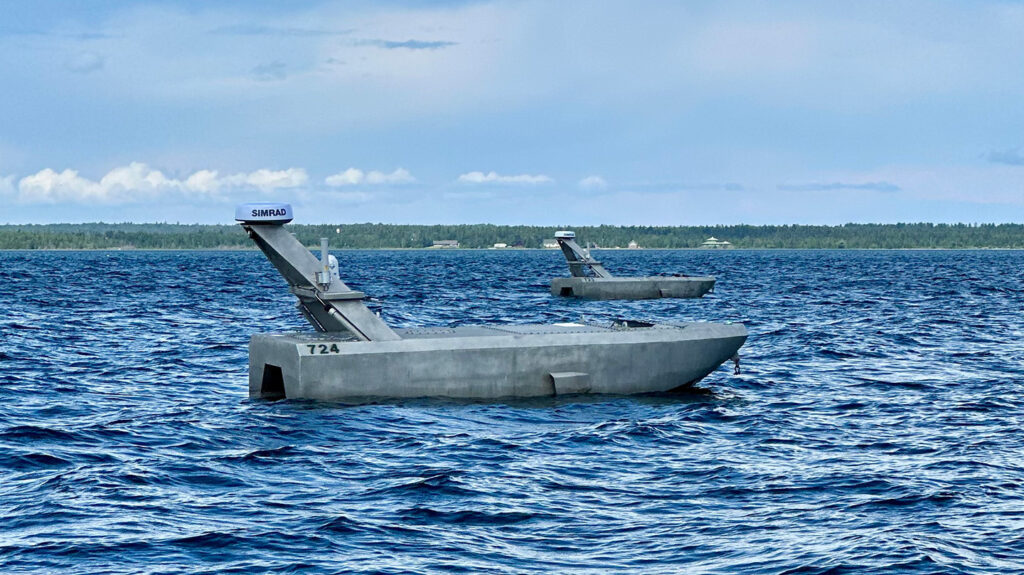
Autonomous GARG vessels known as unmanned ships, are vessels that are capable of operating without human intervention. They are equipped with a range of advanced technologies, such as sensors, navigation systems, and artificial intelligence (AI). These technologies enable them to make decisions and operate safely and efficiently. The aim behind the development of autonomous ships is to make shipping safer, more efficient and cost-effective than before, while reducing the need for human crew members on board.
HOW THEY CHANGING THE MARITIME INDUSTRY:
- Improved efficiency and safety: Autonomous ships are equipped with advanced technologies such as AI, machine learning, and the Internet of Things (IoT), which can help optimize vessel operations, enhance safety, and reduce the possibility of human error.
- Data-driven operations: Autonomous ships generate a vast amount of data, which can be analyzed to improve decision-making, reduce costs, and enhance safety. The use of machine learning algorithms and predictive analytics can help identify patterns, predict outcomes, and optimize vessel operations.
- Remote and autonomous operations: Autonomous ships can be controlled from shore-based control centers by using real-time data and communications systems. They can monitor and control the ship’s movements, navigation, and other operational functions. This allows ships to be operated with greater efficiency, reduced costs, and enhanced safety..
KEY APPLICATIONS AND TECHNOLOGIES:
1. Navigation and Path Planning
- GPS and Sensor Fusion: Autonomous vessels use GPS for positioning, along with radar, lidar, cameras, and other sensors to map out their surroundings. These sensors help the vessel navigate through obstacles and avoid collisions.
- Path Planning Algorithms: These algorithms use data from the vessel’s sensors to calculate the best route, optimizing for fuel efficiency, safety, and speed.
2. Collision Avoidance Systems
- AI-Powered Decision-Making: Artificial Intelligence (AI) and machine learning algorithms are used to process real-time data, predicting potential collisions and making decisions on course changes or emergency maneuvers.
- Obstacle Detection: Using sonar, radar, lidar, and visual cameras, the vessel detects other ships, underwater obstacles, and environmental factors like icebergs or debris, allowing it to adjust its course accordingly.
3. Remote Monitoring and Control
- Remote Operations Centers: Autonomous vessels often have remote operations centers (ROCs), where human operators can monitor and intervene if necessary. This helps ensure the safety of the vessel while reducing the need for onboard crew.
- Teleoperation: In cases of emergencies or difficult situations, human operators can take control remotely to guide the vessel.
4. Communication Systems
- Vessel-to-Vessel (V2V) and Vessel-to-Shore (V2S): Communication systems allow autonomous vessels to exchange information with other ships and shore facilities. This is crucial for coordinated traffic management and emergency response.
- Satellite Connectivity: Satellite communication systems are used to maintain continuous communication, especially for deep-sea voyages where traditional cellular or radio signals are unavailable.
ADVANTAGES:
It’s a fast-response unmanned vessel with a very compact size, compared to a conventional security vessel,” says Oceanalpha general manager Ran Zhang.
According to Zhang, one of the main advantages of using an autonomous vessel like the M75 is the lack of human labour. In fact, it is cheaper for customers to use USVs than it is to employ a crew, especially when considering security tasks.
“No one can work 24 hours a day, you need to have shifts,” he adds. “Autonomous boats can just go out to sea continuously, without resting. Autonomous boats can also go to dangerous and complicated environments, without having to worry about crew safety.”
DISADVANTAGES:
Regulation: The deployment of autonomous ships faces significant regulatory challenges, including the lack of international standards, complex regulatory compliance, lengthy approval processes, and uncertainty around liability and insurance. The maritime industry must work with governments and regulators to develop clear and consistent standards for the deployment of autonomous ships.
This will ensure that the technology is developed and deployed in a safe and responsible manner, and ship owners and operators can comply with regulatory requirements. Addressing these regulatory challenges will be crucial for the successful deployment of autonomous ships and the continued growth of the maritime industry.
Technical challenges: Autonomous ships rely on sensors to provide real-time information about the ship’s environment, such as its location, speed, and direction. These sensors must be able to operate accurately and efficiently in the marine environment, and the data they generate must be processed in real time to support the safe operation of the ship.
Moreover, autonomous ships require various systems, such as navigation, communication, and power to work together seamlessly. This requires the integration of these systems to be well-designed and tested to ensure that they can operate reliably and efficiently.
Cyber Security: Cybersecurity is a major concern when it comes to autonomous ships. As these ships rely heavily on technology, they are vulnerable to cyber-attacks that could compromise the ship’s operations and put the safety of the vessel and its cargo at risk. For example, an attacker can gain access to the ship’s navigation systems and alter its course, causing a collision or putting the ship in danger. Additionally, cyber criminals can gain access to sensitive data stored on the ship, such as personal information or trade secrets, which may have serious consequences.