
INTRODUCTION
Air Defense Missiles are designed to detect, track, and intercept enemy aircraft, drones, and missiles.
These systems provide protection against aerial threats for military bases, strategic locations, and civilian areas.
AIR DEFENSE MISSILE
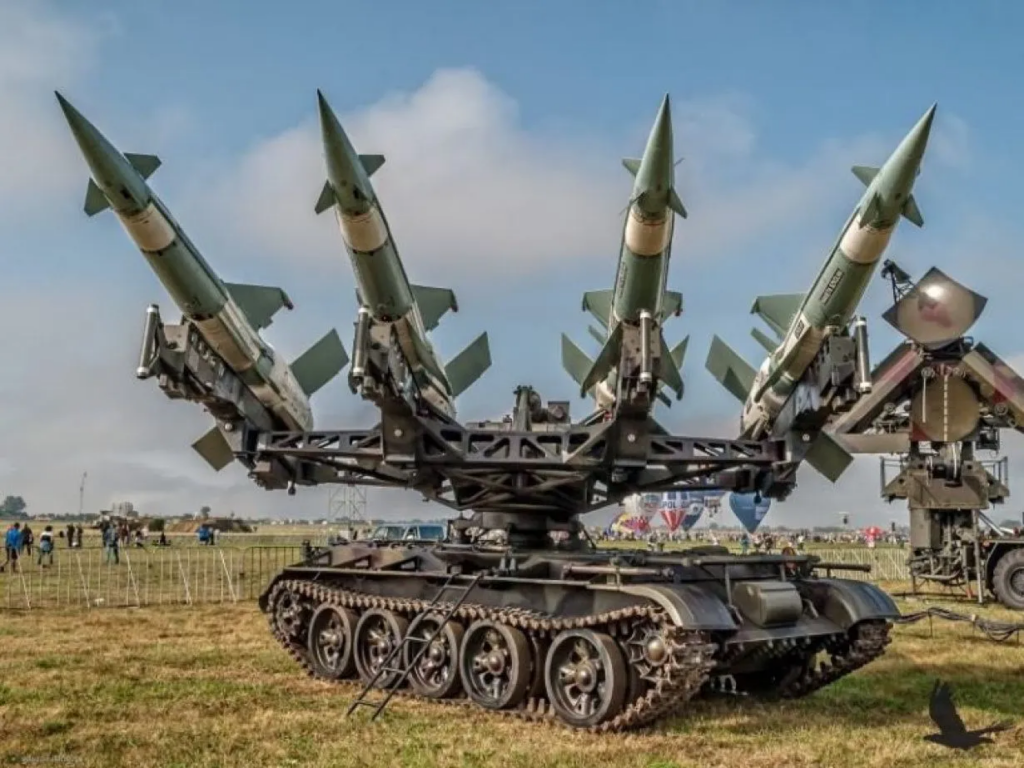
TYPES OF AIR DEFENSE MISSILES
Short-Range Air Defense (SHORAD):
- Effective up to 10-15 km.
- Examples: FIM-92 Stinger, RBS 70, Tor-M2.
Medium-Range Air Defense (MRAD):
- Covers 15-100 km.
- Examples: NASAMS, Buk-M3, SAMP/T.
Long-Range Air Defense (LRAD):
- Protects vast areas with over 100 km range.
- Examples: S-400, Patriot PAC-3, HQ-9.
Ballistic Missile Defense (BMD):
- Designed to intercept ballistic missiles in various flight phases.
- Examples: THAAD, Aegis BMD, S-500.
HOW AIR DEFENSE MISSILE WORKS
Detection: Radar systems identify incoming threats.
Tracking: Sensors and command centers calculate the threat’s trajectory.
Engagement: The missile is launched and guided towards the target using radar, infrared, or command systems.
Interception: The missile destroys or disables the threat using direct impact or proximity explosion.
KEY TECHNOLOGIES OF AIR MISSILE
1. Radar & Sensor Systems 📡
- Active Electronically Scanned Array (AESA) – High-speed, long-range detection and tracking.
- Phased Array Radar – Tracks multiple targets simultaneously.
- Infrared & Electro-Optical Sensors – Detect stealth aircraft and low-flying threats.
- Passive Radar – Uses enemy signals to track stealth aircraft.
2. Guidance & Tracking Systems 🎯
- Command Guidance – Missile follows commands from the ground station.
- Semi-Active Radar Homing (SARH) – Uses ground radar to guide the missile.
- Active Radar Homing (ARH) – Missile has its own onboard radar for independent tracking.
- Infrared Homing (IR) – Heat-seeking technology for engaging aircraft and drones.
- Dual-Mode Guidance – Combines multiple tracking methods for higher accuracy.
3. Propulsion Systems 🚀
- Solid-Fuel Rocket Motors – Provide rapid acceleration.
- Ramjet & Scramjet Engines – Enable high-speed interception (e.g., Meteor missile).
- Boost-Glide Systems – Used in hypersonic missile defense.
4. Interception & Kill Mechanisms 💥
- Hit-to-Kill (Kinetic Kill Vehicle, KKV) – Direct impact destroys the target (e.g., THAAD).
- Proximity Fuze – Explodes near the target, creating a blast radius.
- Directed Energy Weapons (DEWs) – Lasers or microwaves disable threats without explosives.
PROS AND CONS
✅ Pros:
- Provides national security against aerial attacks.
- Can neutralize threats before they reach their targets.
- Enhances military deterrence and defense.
❌ Cons:
- Expensive to develop and maintain.
- Can be overwhelmed by multiple or highly maneuverable targets.
- Potential for false alarms and accidental engagements.