
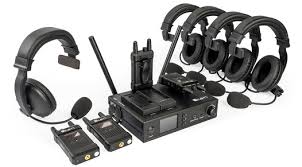
WIRELESS INTERCOMS

INTRODUCTION
A wireless intercom is a communication system that allows individuals to communicate with each other across different rooms, floors, or areas within a building or property, without the need for wired connections. These systems use wireless technology such as radio frequency (RF), Wi-Fi, Bluetooth, or other communication protocols to transmit and receive audio signals.
Unlike traditional wired intercom systems, which rely on physical cables and infrastructure to connect units, wireless intercoms offer more flexibility and convenience, making them ideal for a wide range of settings, from homes to businesses and industrial applications.
HOW IT WORKS?
Wireless intercoms typically consist of two main components:
- Base Station/Control Unit: This is the central unit, often mounted in a fixed location like a wall or desk. It may have a speaker, microphone, and controls for adjusting the volume or changing settings.
- Remote Stations/Units: These are the portable or fixed units placed in different areas where communication is needed. They have microphones and speakers to allow communication with the base unit.
TECHNOLOGIES USED IN W-INTERCOMS
Radio Frequency (RF): Similar to walkie-talkies, RF-based systems use radio waves to send and receive signals over short to medium distances.
Wi-Fi: Some advanced wireless intercoms use Wi-Fi to transmit audio over a home or office network. These systems can integrate with smartphones and other smart devices.
Bluetooth: Bluetooth-based intercoms work over short distances and are commonly used in personal or small-scale settings, such as between rooms in a houses.
Zigbee or Other Mesh Networks: These networks use low-energy signals for long-range communication and are often used in larger systems, like in smart home environments.
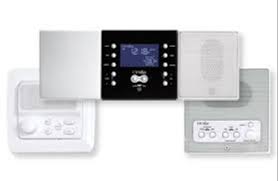
APPLICATIONS IN WIRELESS INTERCOMS:
- Residential Use: Wireless intercoms are widely used in homes for communication between rooms or with visitors at the door. They can also be integrated with home security systems to enhance communication with smart doorbells.
- Commercial Use: Offices, retail stores, warehouses, and factories often use wireless intercoms to improve communication between departments, teams, or security personnel, especially in large or multi-level buildings.
- Security: In security setups, wireless intercoms can be used in combination with surveillance cameras to allow security teams or homeowners to communicate with visitors or intruders at entry points or gates.
- Healthcare: Hospitals and healthcare facilities use wireless intercoms for communication between staff across different departments or rooms, ensuring rapid response times and smooth coordination.
- Industrial Settings: In large factories or manufacturing plants, wireless intercoms help employees communicate quickly over long distances in noisy or spacious environments.
BENIFITS OF WIRELESS TELECOMS:
- Easy Installation: Wireless intercom systems are easy to install and don’t require extensive wiring, making them less invasive and more cost-effective to set up compared to traditional wired systems.
- Integration with Smart Devices: Many modern wireless intercom systems can integrate with smartphones, tablets, and other smart devices, allowing users to make and receive calls remotely, from anywhere within the network’s range.
- Convenience: They can be used in various settings, such as residential homes for communication between rooms or entrances, as well as in offices or industrial spaces for quick communication across departments or areas.
DISADVANTAGES OF WIRELESS TELECOMS:
- Limited Range:
- Wireless intercoms are limited by the range of their wireless signal. In larger buildings or areas with thick walls, the signal may be weak or even cut off, leading to poor audio quality or complete communication failure in certain locations.
- Battery Life:
- Many wireless intercoms, particularly portable ones, rely on batteries. If the system is not plugged into a power source, you may need to regularly replace or recharge the batteries. Poor battery life can be a major inconvenience in high-usage scenarios.
- Limited Features in Lower-End Models:
- Basic models of wireless intercoms may lack advanced features like video integration, two-way communication, or long-distance support. These limitations can reduce their usefulness in certain applications, such as in large office buildings or homes with multiple floors.
- Cost:
- High-quality wireless intercoms, especially those that offer features like video, long-range communication, or advanced security, can be more expensive than traditional wired systems. This might be a barrier for some users, especially if they have a limited budget.