Analysis: AI-Driven Inflation Is 2026’s Most Overlooked Risk, Investors Say
By Pentoz Technology, Ooty
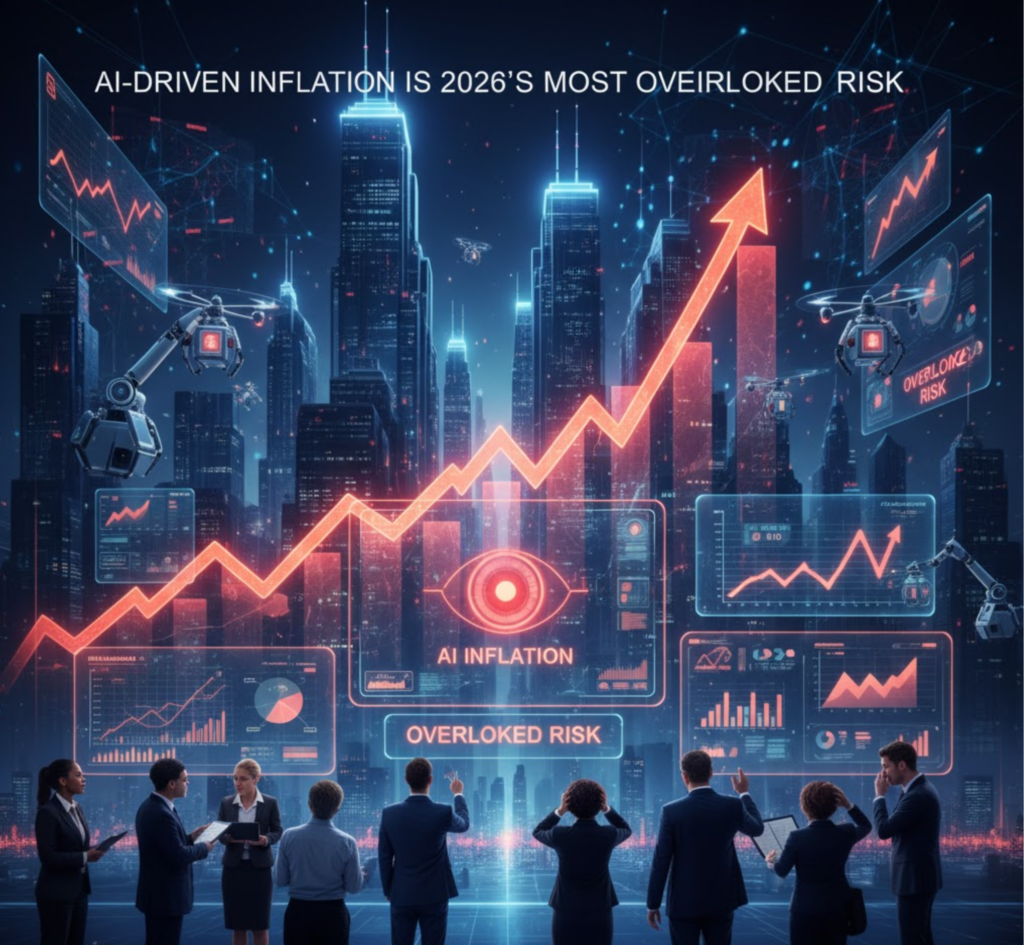
As artificial intelligence continues to redefine industries at unprecedented speed, most discussions focus on productivity gains, innovation, and economic growth. However, a growing number of investors and analysts are pointing to a quieter concern—AI-driven inflation, which could emerge as one of 2026’s most underestimated economic risks.
While AI promises efficiency, it may also introduce new cost pressures that markets and policymakers are not fully prepared for.
What Is AI-Driven Inflation?
AI-driven inflation refers to price pressures caused by the rapid adoption and scaling of AI technologies across the global economy. Unlike traditional inflation, which often stems from supply shortages or demand surges, AI-related inflation arises from:
- Rising costs of advanced AI infrastructure
- Increased demand for scarce skilled talent
- Heavy investment in data centers, chips, and energy
- Premium pricing for AI-powered products and services
In short, AI boosts productivity—but it also raises the cost of doing business in critical sectors.
Why Investors Are Growing Cautious
Many investors believe markets are underestimating how AI adoption could reshape cost structures by 2026.
1. Expensive Infrastructure
Running large-scale AI systems requires:
- High-performance chips
- Massive data centers
- Significant energy consumption
These costs are passed down the value chain, potentially raising prices for businesses and consumers alike.
2. Talent Scarcity and Wage Inflation
AI expertise is limited and highly sought after. As demand for data scientists, AI engineers, and machine-learning specialists grows, wages rise sharply, pushing up operating expenses across industries.
3. Concentration of Market Power
AI innovation is heavily concentrated among a few tech giants. Reduced competition can lead to higher pricing power, especially for essential AI services and platforms.
4. Productivity Gains Take Time
While AI promises efficiency, real productivity benefits often lag behind investment. In the short term, companies spend heavily on AI integration before seeing returns—adding inflationary pressure in the interim.
How This Could Impact the Global Economy in 2026
By 2026, AI adoption is expected to accelerate across healthcare, finance, manufacturing, retail, and education. If costs rise faster than productivity gains:
- Businesses may pass expenses on to consumers
- Margins could tighten for smaller firms
- Interest rate policies may face new challenges
- Inflation could remain “sticky” despite economic growth
This scenario complicates central bank strategies, especially in economies already balancing growth with price stability.
Is AI Inflation Inevitable?
Not necessarily—but it depends on how responsibly AI is deployed.
Mitigating Factors Include:
- Open-source AI models reducing dependency costs
- Energy-efficient computing innovations
- Broader AI skill development to ease talent shortages
- Regulatory frameworks encouraging fair competition
Long-term, AI could actually reduce inflation by increasing productivity and lowering costs. The concern lies in the transition phase, particularly around 2026, when adoption peaks and investments surge.
What This Means for Businesses and Learners
For businesses:
- AI adoption should be strategic, not rushed
- Cost-benefit analysis is critical
- Investing in internal AI capability can reduce long-term dependency costs
For students and professionals:
- AI skills will be highly valuable—but expectations must be realistic
- Understanding both technology and economics will be a competitive advantage
At Pentoz Technology, Ooty, we emphasize practical, value-driven AI learning, helping individuals and organizations prepare for both the opportunities and risks of AI-led transformation.
Conclusion
AI is reshaping the global economy—but it is not without trade-offs. As investors warn, AI-driven inflation could become one of 2026’s most overlooked economic risks, especially during this intense adoption phase.
The challenge ahead is balance: harnessing AI’s transformative power while managing its cost pressures responsibly. Those who understand this dynamic early will be better positioned to thrive in the AI-powered future.